Replacing Five Disconnected Spreadsheets With One Unified Operational System
A refrigeration-services company was managing customers, quotations, invoices, stock, and technician work across paper, memory, and disconnected files. This custom platform replaced that manual chaos with a single connected system where a quotation, the invoice it becomes, and the stock it consumes are all tracked automatically.
Growth without systems
The client is a growing SME that sells, quotes, delivers, and invoices refrigeration equipment and field interventions. Like many businesses at this stage, their operations had scaled faster than their record-keeping. They were attempting to run a complex logistics and service operation without a shared system.
The cost of manual reconciliation
Information was trapped in silos. Quotations were typed fresh each time because nothing linked back to a customer's history. Invoices existed with no reliable trace to the job or the stock they consumed. Technicians' fieldwork wasn't visible to the office, and the office's paperwork wasn't visible to technicians.
Most critically, a "stock count" meant someone physically walking to the shelf, because nothing tracked what a completed job had actually consumed in real time.
Before
- Customer, quotation and invoice records kept separately with no reliable link.
- No connected trace between a job, the stock it consumed and the invoice it produced.
- Technician fieldwork invisible to the office in real time.
- Stock levels checked manually, not tracked against actual movements.
- No searchable history across documents and interventions.
After
- Customer, quotation, order, invoice and collection modelled as one connected lifecycle.
- Stock movements linked directly to the interventions and documents that generated them.
- Technician task planning visible from the same system the office uses.
- Inventory tracked as a ledger of inbound, outbound and adjustment events.
- One searchable operational history spanning all departments.
One connected operational workflow
I designed and built a custom software platform where everything hangs off connected states rather than independent modules. A customer record establishes identity. A quotation captures scope against that customer. An invoice closes the loop financially and stays permanently linked back to the job.
Stock movements attach to this same core: an intervention that consumes a part writes a stock-ledger entry automatically, not a manual adjustment someone has to remember to make later. A manager can now open one customer profile and see their full quotation-to-invoice history, the stock consumed, and which technician handled it, in one place.
What changed for the business
Eliminated the need to manually cross-reference invoices with completed jobs.
Stock levels now update automatically based on field interventions.
Management can track the entire lifecycle of a client request from quote to cash in seconds.
Built for reliability, not complexity
The system was built using Laravel and MySQL. Instead of chasing complex, unproven architectures, I focused on robust relational data modeling. The distance from data model to shipped feature had to be short and completely secure.
Role-based access was implemented from day one, meaning office staff, technicians, and administrators see different, secure slices of the same data model.
Inside the platform
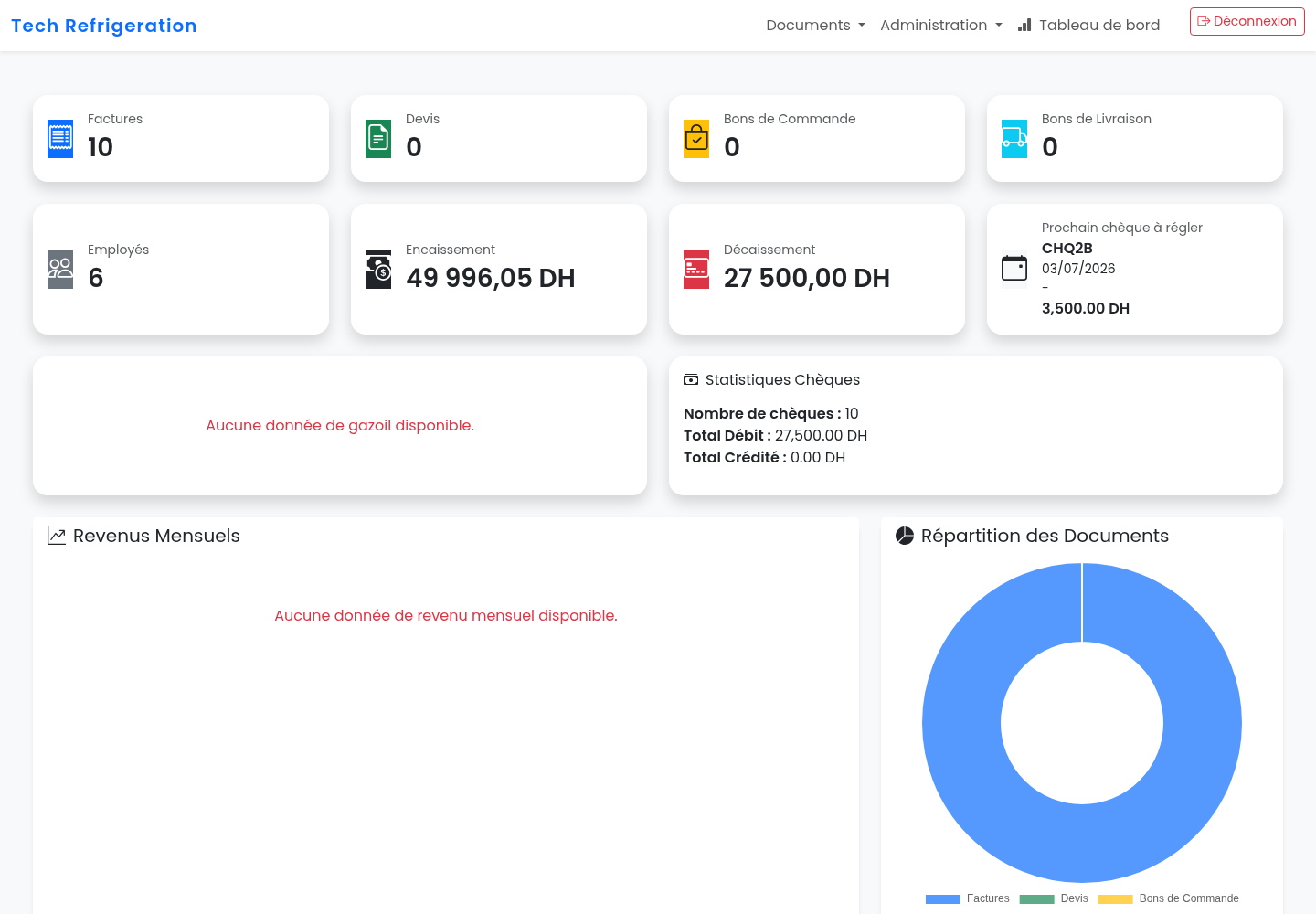
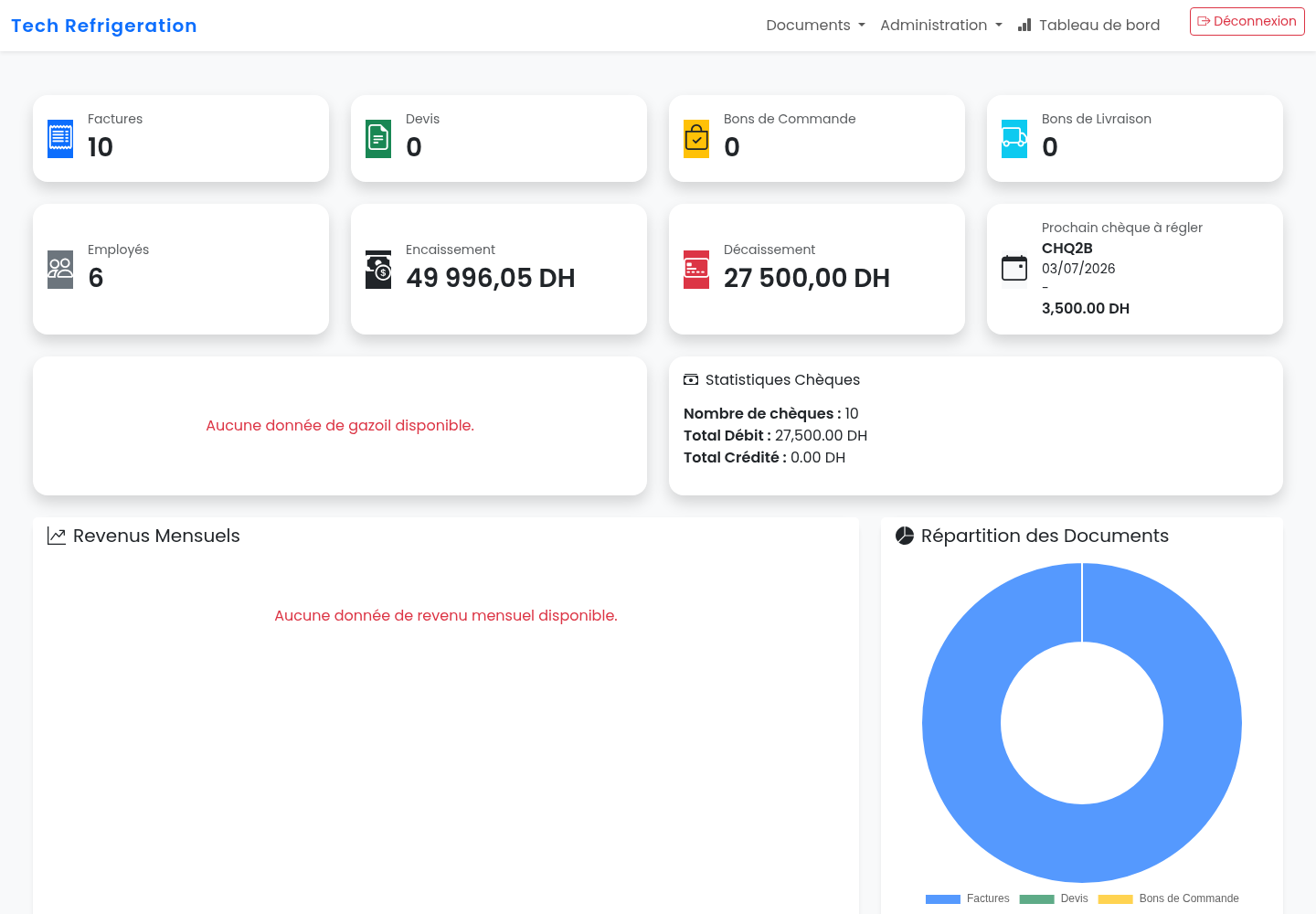
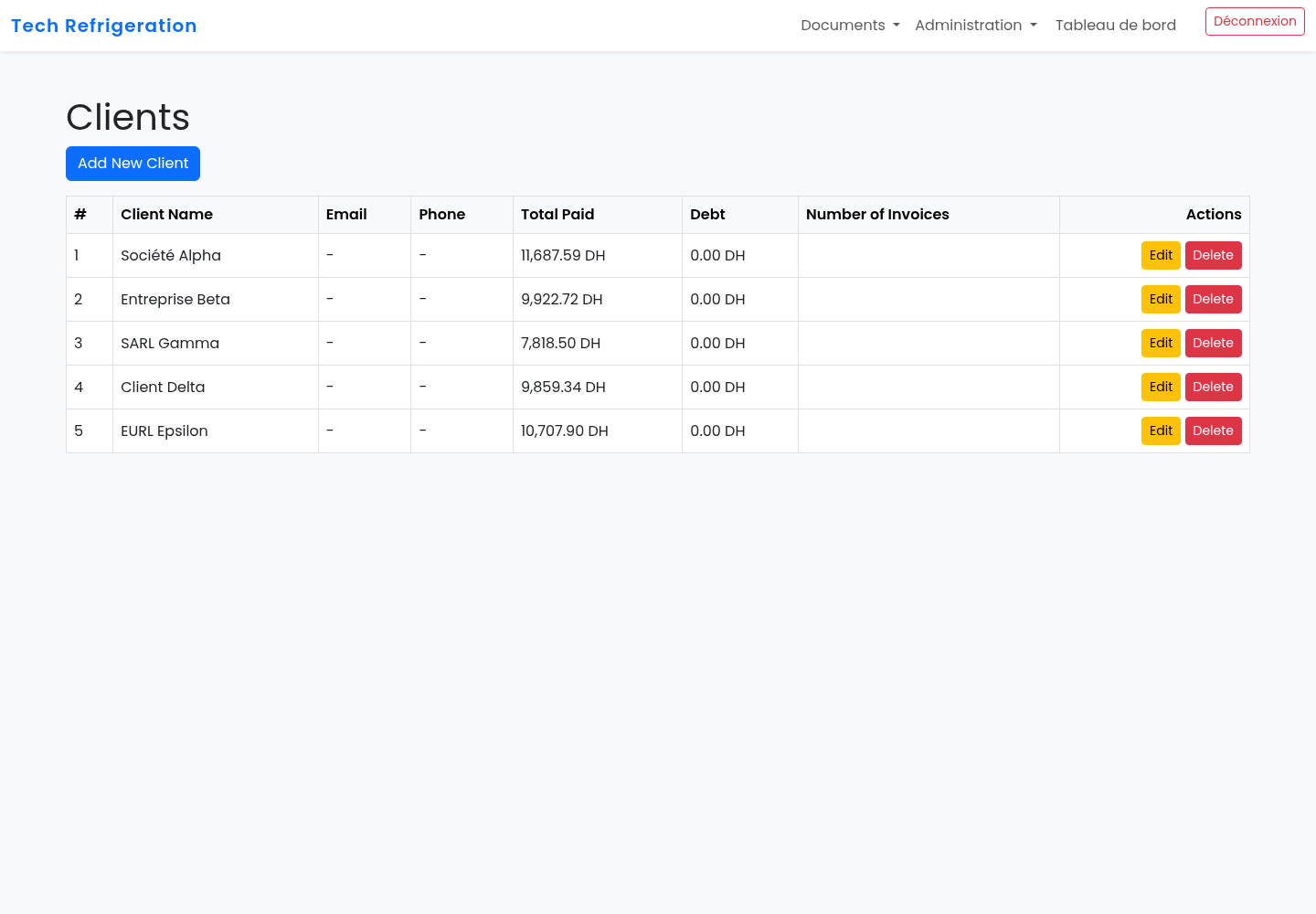
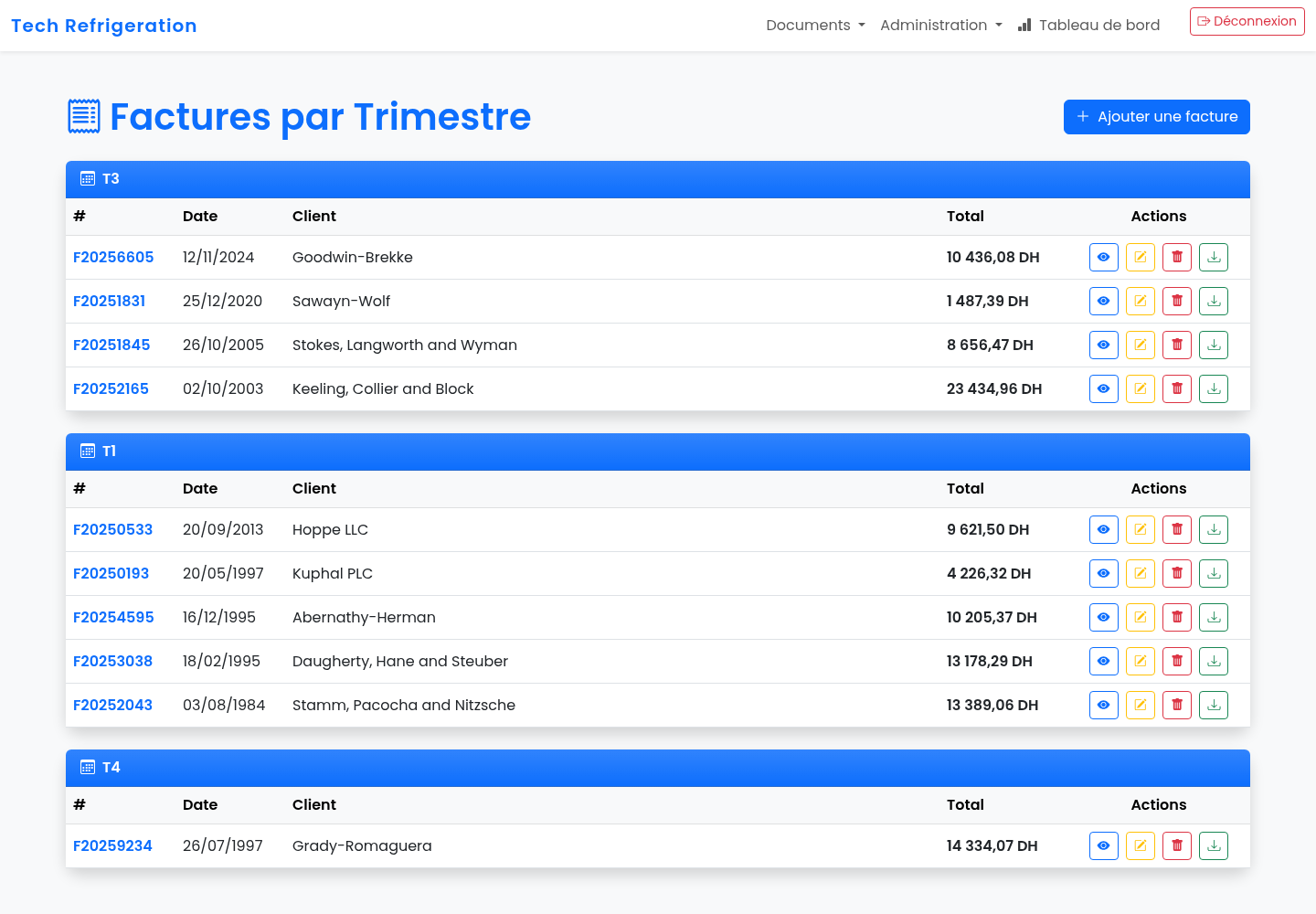
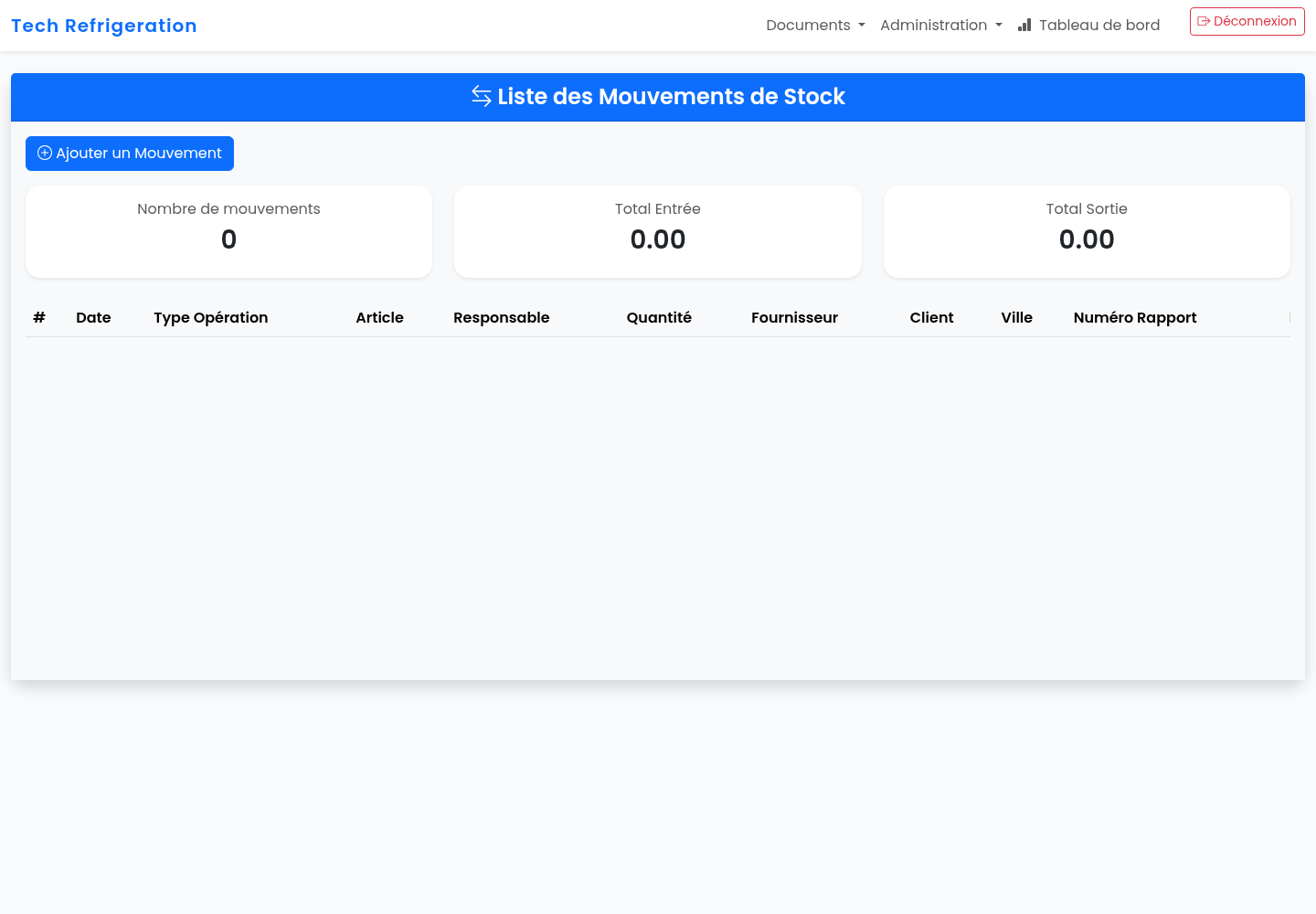
Screenshots show the actual working modules (using synthetic data for confidentiality).
Complete Ownership
- Requirements analysis and workflow mapping directly with the client.
- Data modelling for the full operational domain.
- The complete backend architecture and user interface.
- Authentication, role-based access, and permissions.
- Deployment, hosting configuration, and team handoff documentation.
Is your team still managing operations manually?
If your company has outgrown spreadsheets and disconnected tools, a custom operational system can give you your time back.