Turning Fragmented Market Data Into Actionable Intelligence
A commercial opportunity is rarely a single, clean data point—it is usually a combination of a registry filing, a hiring pattern, and a procurement notice that only mean something together. Elevya Signal Intelligence is a custom data platform designed to collect those fragments, prove their accuracy, run them through pattern detection, and present them clearly for human review.

Too much data, not enough insight
Businesses looking to identify B2B leads or market opportunities often rely on manual research across multiple disconnected sources: job boards, procurement portals, company websites, and public registries.
This process is slow, expensive, and error-prone. By the time a researcher manually connects a change in a company's executive team with a new hiring push, the commercial opportunity has often already passed to a competitor.
Automated noise vs. actionable intelligence
The standard solution is usually to buy a generic "lead generation" tool. However, these tools simply scrape data and dump unverified alerts into an inbox. Without knowing where the data came from (evidence lineage), an automated alert is just noise.
If a system generates a lead, the sales team needs to know why this lead matters right now, and they need to trust that the data isn't stale.
Before
- Manual research across disconnected sources.
- Unreliable data with no clear source or timestamp.
- Sales teams wasting time qualifying bad leads.
- No clear separation between raw data and verified intelligence.
After
- Automated data acquisition across registries, job boards, and procurement.
- Strict evidence lineage—every insight points to exactly where it came from.
- Pattern detection to surface only corroborated opportunities.
- A human-in-the-loop review gate before any data reaches the client.
Controlled data processing
I architected a platform where raw signals arrive into a strict canonical database schema. The system looks for corroboration across sources—for example, if a company registers a new office address and starts hiring heavily in that city, the system detects this pattern as a highly qualified signal.
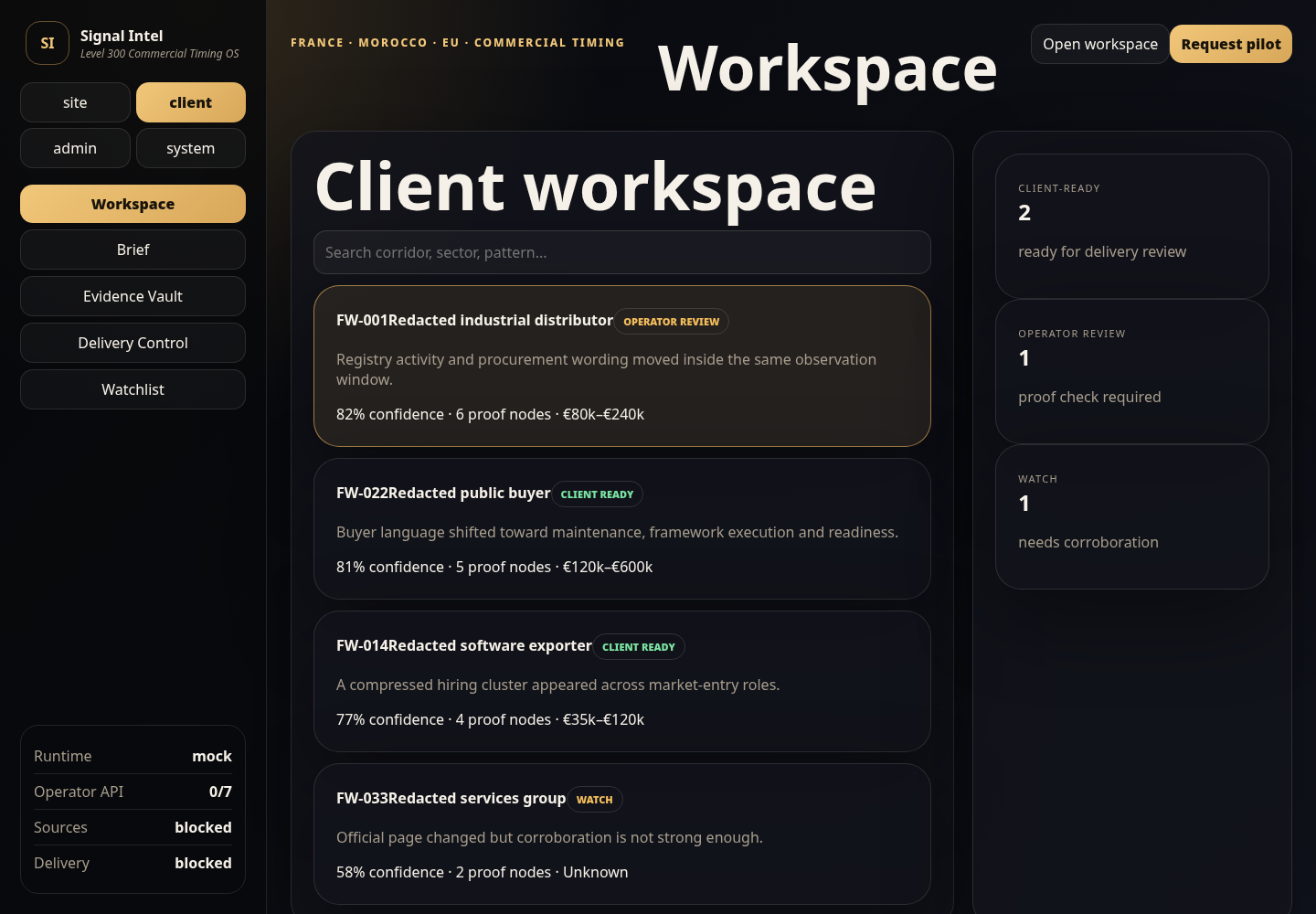
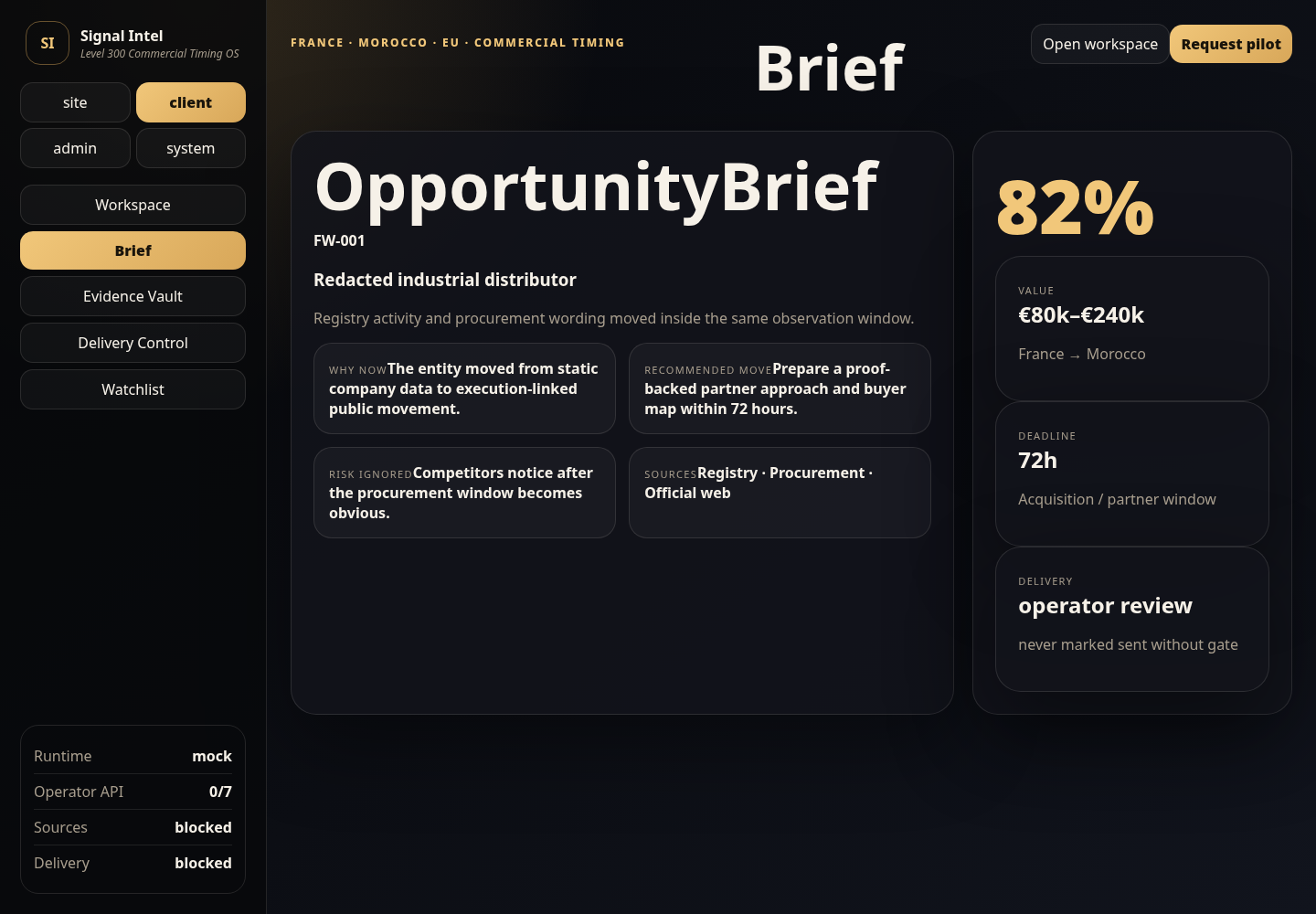
Crucially, the system refuses to automatically send anything to a client. Qualified signals land in an internal workspace where a human operator reviews the evidence, confirms the confidence score, and approves the delivery. It is built to protect the business's reputation by ensuring zero "garbage" data reaches the end user.
What changed for the business
The system automatically monitors and correlates data sources 24/7.
Evidence lineage means the team never has to guess if a lead is accurate or outdated.
The hard human-review gate ensures clients only receive premium, verified intelligence.
Auditable architecture
The system is built on a robust PostgreSQL database with strict constraints to ensure data integrity. Instead of relying on a "black box" algorithm, the scoring and pattern detection logic is explicit and auditable.
A comprehensive CLI tool allows the system administrator to run preflight checks, smoke tests, and migration dry-runs, ensuring the system refuses to operate if a data source is broken or credentials are missing.
Inside the platform
UI captures of the internal workspace and system health dashboard (running in synthetic mock mode for confidentiality).


Complete Ownership
- Platform and source-ecosystem architecture.
- Canonical schemas and strict database migration ordering.
- Quality-gate and production-readiness harnesses.
- The evidence, pattern detection, and briefing workflow.
- The internal operator workspace and client-facing interfaces.
Are you relying on manual research for critical data?
If your team spends hours manually gathering and verifying information across multiple websites, an automated intelligence platform can do it faster and more accurately.