Make the handoff between your systems reliable.
I build and stabilize the backend flows that connect operational tools, customer records, field activity, accounting and internal workflows — without forcing a full platform replacement.
Need bounded backend capacity?
Start with a paid 3–5 day Laravel, API or integration sprint. Receive working code, tests and a concise handover before committing to a longer engagement.
View the agency sprint →Need two systems to work together?
Validate the access, mapping, failure path and operational result before funding a full connector or workflow layer.
View integration validation →Working Proof
Systems in production solving actual data flow and integration problems.
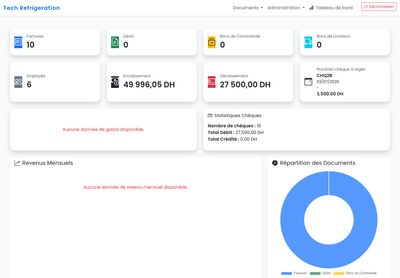
Field Service Operations
LiveA single connected platform linking customer intake, technician dispatch, van stock, and PDF certificates.

Delivery Operations Engine
LiveCentralized dispatch and order tracking for local delivery couriers, replacing WhatsApp and spreadsheets.
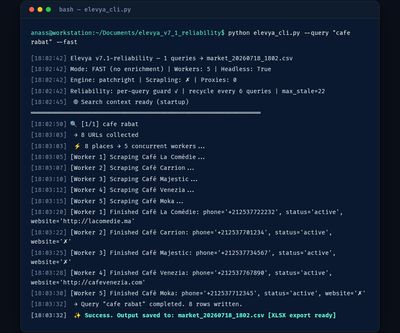
Local Market Intelligence
LiveAutomated extraction and classification of local retail pricing and availability signals across disparate regional sources.

Signal Intelligence
Controlled validationAsynchronous ingestion and scoring pipeline for unstandardized external alerts. Demonstrates resilient queue processing under simulated load (mock mode).
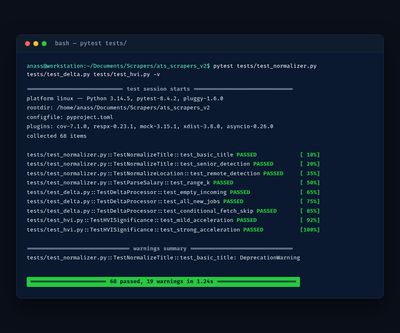
ATS Intelligence
BetaParsing and normalizing applicant resumes into structured schema, feeding an applicant tracking system.
[ Pending Visual Evidence ]
Institutional Stock Integration
LiveSecure, high-frequency synchronization between a central ERP inventory and a B2B ordering portal.
Defined technical outcomes worth proving.
Paid Backend Trial
3–5 working days
One bounded backend, API, migration or reliability task. Working code, tests and handover.
Learn moreIntegration Validation
5–10 working days
Access, mapping, proof-of-flow, failure model and fixed implementation recommendation.
Learn moreRescue & Stabilization
3–10 working days
Diagnose, contain and repair one failing backend or integration.
Learn moreEngineering Notes
Open Source Stack to Replace Bright Data (CAPTCHA + Residential)
A comprehensive open-source stack using FlareSolverr, Camoufox, and Tor to bypass CAPTCHAs and simulate residential proxies for web scraping.
Backend ReliabilityInheriting and Stabilizing a Legacy Laravel Project
The strict sequence required to safely take over, audit, and stabilize an abandoned or broken Laravel application.
IntegrationsReliable Connector Design for Disparate APIs
Architectural rules for building data connectors that do not fail silently when vendor APIs change.
Define one technical outcome worth proving.
Describe the system, handoff or backend problem. I will tell you whether it fits a paid trial, integration validation, rescue sprint or no custom project at all.
Discuss the problem